
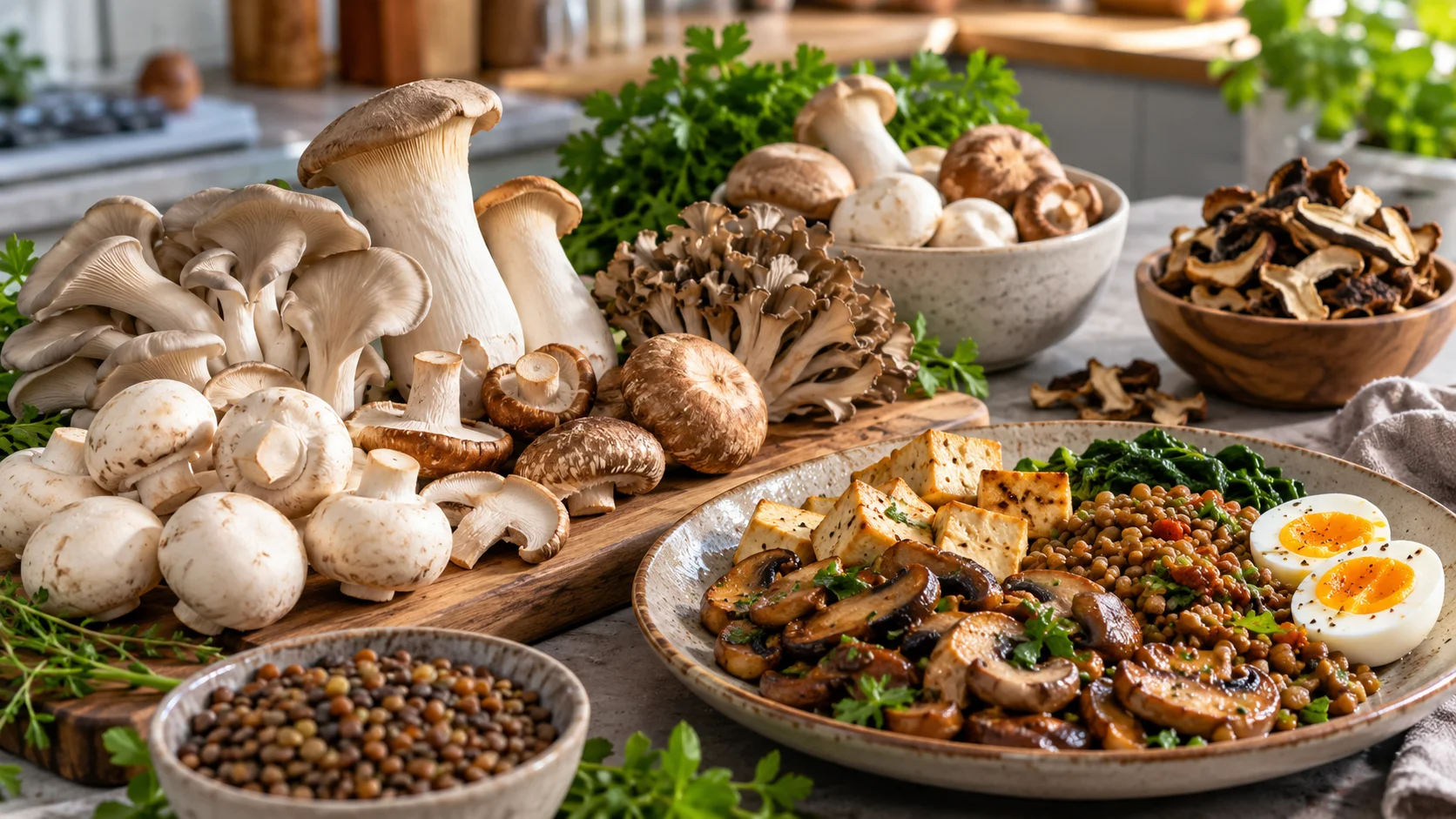
Mushrooms have a meaty texture, so many people assume they are packed with protein. Protein in mushroom is useful, but fresh mushrooms are not as protein-dense as eggs, paneer, lentils, soy or chicken.
Most fresh edible mushrooms provide about 1.9 to 3.3 grams of protein per 100 grams. They can support a healthy meal but cannot meet a person’s daily protein requirement alone because they contain so much water.
This guide explains protein in mushroom without exaggerated claims, including varieties, fresh and dried forms, amino acids and meal planning.
How Much Protein in Mushroom Is Present?
The amount of protein in mushroom changes with the species, strain, maturity and testing method. Fresh mushrooms normally contain 85 to 95 percent water. Removing that water concentrates the nutrients.
Research reviews report an average of about 23.8 grams per 100 grams of dry mushroom matter. Values differ widely among species, so fresh and dried figures are not equal. A dried product may show a large number per 100 grams while its serving is only one or two spoonfuls.
| Mushroom form | Approximate protein | What it means |
| Fresh edible mushrooms | 1.9–3.3 g per 100 g | Normal ready-to-cook product with high water content |
| Dried mushroom matter | Average around 23.8 g per 100 g | Concentrated after most water is removed |
| Mushroom concentrate | Varies by product | Serving size and ingredients must be checked |
The protein in mushroom powder should therefore be judged per serving, not by the largest number on the front of the pack.
Protein in Different Mushroom Types
Common edible varieties have slightly different nutritional profiles. The following fresh-weight figures are approximate and may change by farm, strain and laboratory method.
| Mushroom type | Approximate protein per 100 g fresh | Practical note |
| White button | 3.09 g | Widely available and easy to cook |
| King oyster | 2.41 g | Firm texture suits grills and stir-fries |
| Shiitake | 2.24 g | Strong flavour; available fresh or dried |
| Oyster | About 2.0 g | Light texture and commonly cultivated in India |
| Maitake | About 1.94 g | Used mainly for flavour and variety |
A small difference in protein in mushroom varieties may disappear when the portion changes. Choose a safe edible type suitable for the dish.
Is Mushroom a Complete Protein?
Mushrooms contain all nine essential amino acids. The body cannot make these amino acids in sufficient amounts, so they must come from food. This gives protein in mushroom a useful amino acid profile.
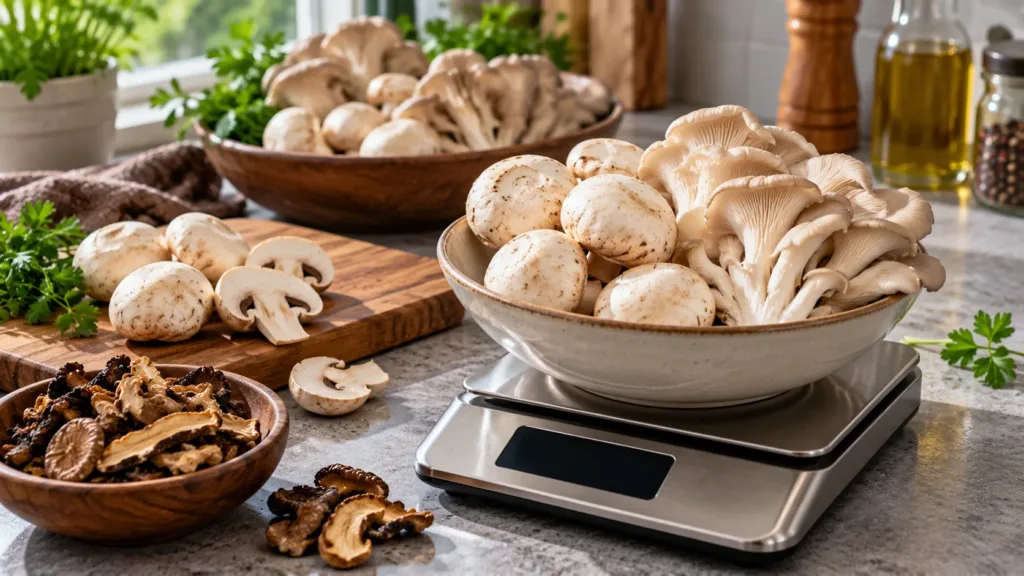
Still, mushrooms are not automatically a major protein source. Quantity, amino acid balance and digestibility also matter. Their cell walls contain chitin, a fibre the body does not fully break down.
They still contribute.
Fresh Mushroom Versus Dried Mushroom
Fresh and dried mushrooms are the same food in different concentrations, much like grapes and raisins. Protein in mushroom becomes concentrated after drying, but the portion becomes smaller. A 100-gram fresh serving is reasonable; the same dry weight would become much larger after soaking.
Protein in Mushroom Compared With Other Foods
The figures show why mushrooms work better as a supporting ingredient than the only protein source.
| Food | Approximate protein per 100 g | Main role in a meal |
| Fresh mushrooms | 1.9–3.3 g | Adds modest protein, flavour and volume |
| Green peas | Around 5.4 g | Vegetable with a higher protein level |
| Cooked lentils | Around 9 g | Strong everyday vegetarian source |
| Egg | Around 13 g | Concentrated complete protein |
| Chicken breast | Around 23 g | High-protein animal food |
Protein in mushroom is not a gram-for-gram replacement for chicken, eggs or lentils. A meaty texture does not mean an equal protein quantity.
Protein in Mushroom for Muscle Building
Muscle growth depends on total protein, training, energy, sleep and recovery. Fresh mushrooms alone are unlikely to provide enough protein.
Protein in mushroom still counts toward the daily total. Combine mushrooms with eggs, paneer, tofu, lentils, chickpeas, soy chunks or chicken. Mushrooms add volume and flavour while the partner food supplies more protein.
A mushroom stir-fry becomes more balanced with tofu, peas or eggs. People with medical or sports-nutrition needs should seek qualified guidance.
What About Mushroom Protein Powder?
Mushroom powders are not identical. They may contain whole mushrooms, extracts, mycelium, added plant protein, flavouring, sugar or blended ingredients.
Check the species, mushroom part, protein per serving, ingredient list and testing information. If a blend hides individual amounts, buyers cannot judge the protein in mushroom supplied.
Mycoprotein comes from specific fungi and is used in some meat alternatives. It may provide more protein, but it is a separate product.
Simple Ways to Build a Protein-Rich Mushroom Meal
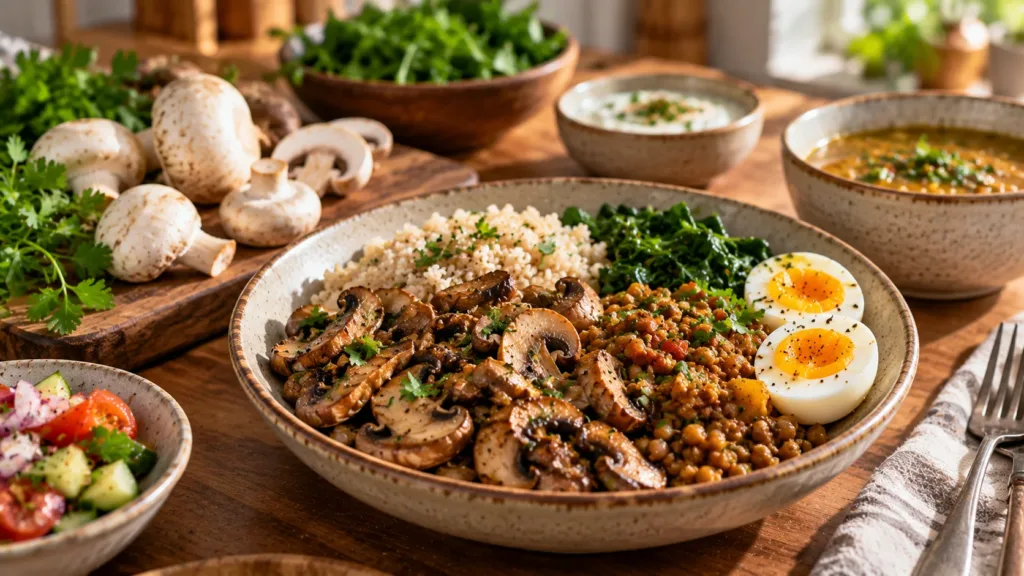
Use mushrooms for flavour and structure, then add a dependable protein food. Useful combinations include:
- Mushroom and egg bhurji for breakfast.
- Oyster mushroom with tofu and vegetables.
- Button mushroom added to dal or chickpea curry.
- Mushroom soup thickened with blended lentils.
Cooking does not create extra protein in mushroom. It mainly changes water, weight and texture. The value per 100 grams may rise when water is lost, but the total amount in the pan has not suddenly multiplied.
Safety note: Eat only correctly identified edible mushrooms from a reliable source. Wild mushrooms can be poisonous. Anyone with an allergy should avoid them, while people using regular medicines should discuss concentrated products with a healthcare professional.
Frequently Asked Questions
Fresh mushrooms contain some protein, but they are not high-protein compared with lentils, soy, eggs, dairy or meat. Protein in mushroom should be treated as a useful addition to a balanced meal.
Most fresh edible mushrooms provide roughly 1.9 to 3.3 grams per 100 grams. The exact protein in mushroom depends on the variety, growing conditions and condition of the product.
Dried mushrooms contain more protein per 100 grams because water has been removed. Compare the protein in mushroom products per actual serving, not only per 100 grams.
Not gram for gram. Fresh mushrooms contain much less protein than chicken. They can replace meat-like texture in some recipes, but another protein source may still be needed.
Final Takeaway
Protein in mushroom is valuable when understood in context. Fresh mushrooms provide a modest amount because most of their weight is water. Dried forms show higher figures because their nutrients are concentrated. Use mushrooms for flavour, texture, fibre and wider nutritional value. Pair them with lentils, beans, tofu, paneer, eggs or meat when the aim is a high-protein meal. This approach is more accurate and more useful than calling mushrooms a protein powerhouse.


About author

Add comment