
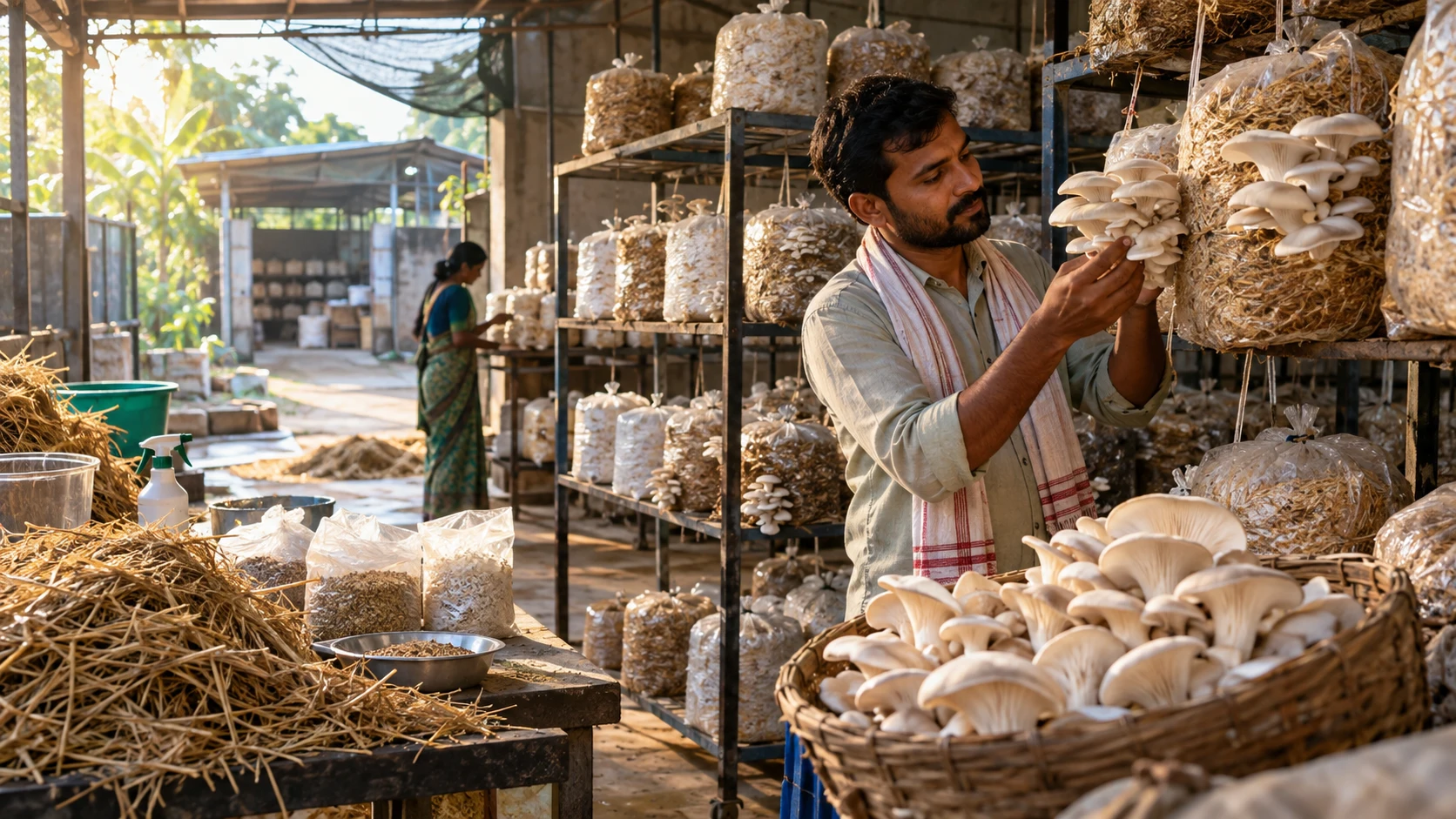
If you’re looking for a business that doesn’t need much land or money, mushroom farming is worth a serious look. You can start in a small room or a shed. You don’t need to wait a whole season for a harvest either, most mushrooms are ready to pick in a few weeks.
That’s probably why more people are getting into mushroom farming every year. In this post, we’ll cover what mushroom farming actually takes: which mushrooms to grow, how the process works, what it costs, and how much you can realistically earn.
What is mushroom farming, exactly?
Mushroom farming is growing mushrooms in a controlled space instead of open farmland. Farmers grow them on straw, sawdust, or other leftover farm waste. No soil needed.
You can set this up in a spare room, a shed, or honestly even a large cupboard if that’s what you have. The main things to manage are temperature, moisture, and keeping the space clean.
Why so many people are starting mushroom farming
A few reasons keep coming up when you talk to people already doing mushroom farming.
It doesn’t cost much to get going, so you can start small and see how it goes before putting in more money. Most mushrooms are also ready to harvest within 20 to 45 days, which is a lot faster than waiting for a regular crop season. The straw and sawdust you’d otherwise throw away become your growing material, so there’s very little waste involved.
You also don’t need much space. One clean room can be your entire farm to begin with. And because demand for mushrooms keeps rising, thanks to more people wanting low-fat, protein-rich food, there’s a real market waiting on the other end.
One more thing worth mentioning: mushroom farming is one of those businesses where skill matters more than physical strength. That’s part of why it works well for women, students, and older adults who want a steady side income.
Picking the right mushroom to grow
This is the first real decision you’ll make, and it depends a lot on where you live.
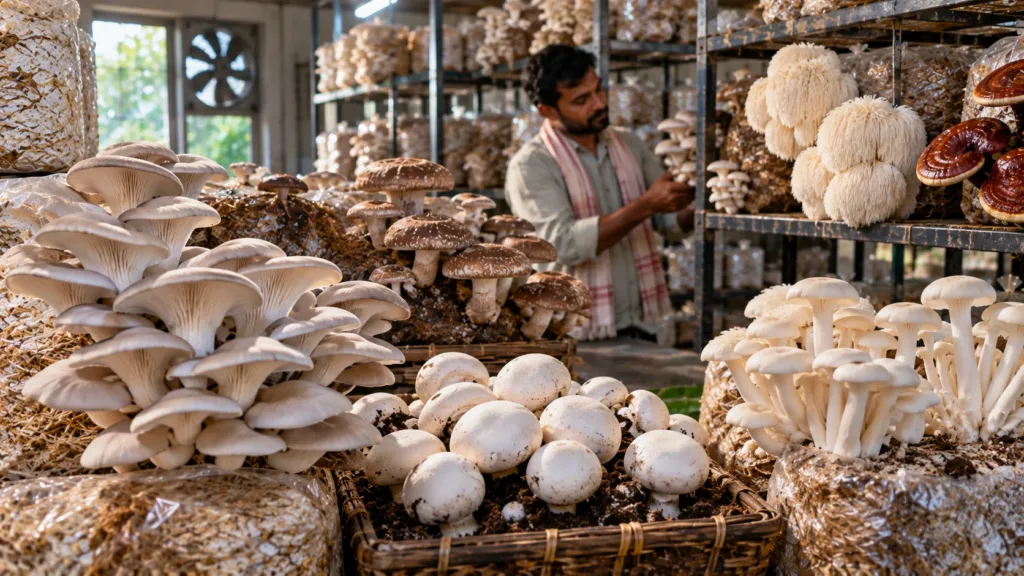
Oyster mushroom is usually the easiest place to start. It handles both hot and cold weather reasonably well, so if you’re new to this, it’s the safer bet. Button mushroom is India’s most commercially popular variety, but it needs a cool room to grow properly, which means a bit more setup cost. If you’re in South India or anywhere warm, milky mushroom tends to do better than button mushroom.
Shiitake is a premium option that sells for a higher price, but it also needs more careful handling, so most growers try it only after they’ve got some experience under their belt. There’s also a smaller but growing market for specialty mushrooms like Cordyceps, Lion’s Mane, and Reishi, mostly driven by demand for health and wellness products.
At da’ Mushroom Nursery, we work across this entire range, from the common oyster and button varieties to the specialty health mushrooms. It’s also what we cover in our training programme.
The mushroom farming process, step by step
Every variety has its own quirks, but the overall process looks roughly like this.
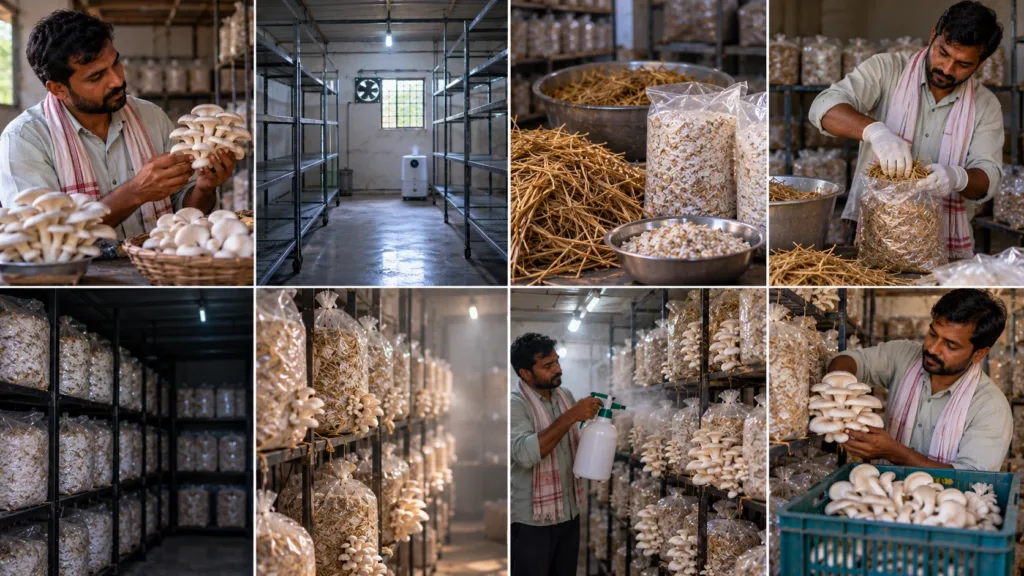
First, pick your mushroom based on your local climate. Then set up a clean room with decent airflow and some shelving. The next part is where most people go wrong: buying good spawn (basically mushroom seeds) from a lab you actually trust. Bad spawn is the single biggest reason first attempts fail, so don’t cut corners here.
Once you have your spawn, prepare the substrate, usually treated straw or sawdust, and mix the spawn into it. That’s spawning. The mix then sits in a dark, humid space for a while so the mushroom’s root system can spread through it. After that, you move everything into a spot with the right light, air, and moisture for the mushrooms to actually form. Then comes harvesting, and the good news is you can often pick the same batch a few times over several weeks.
Through all of this, cleanliness matters more than people expect. One contaminated batch really can ruin your whole crop.
How much does it actually cost?
What mushroom farming actually costs you is flexible, which is part of the appeal.
A very small home setup, just a handful of bags, can start with a few thousand rupees. If you want something more organised, with proper shelving and a dedicated room, you’re usually looking at well under a lakh. A full commercial setup with multiple rooms and cold storage costs more, running into a few lakh rupees depending on how big you go.
The smart move is to start small, get the process right, then scale up once you’re comfortable.
What kind of profit can you expect?
It depends on how much you grow, which variety you pick, and how consistently you’re able to sell. That said, the basic economics work in your favour. A small batch can bring in a few thousand rupees of profit within about a month.
Because mushrooms grow in continuous cycles rather than one seasonal harvest, your income doesn’t have to depend on a single crop the way it does with traditional farming. Two things really drive profit in mushroom farming: keeping your quality consistent, and lining up buyers before you harvest rather than after.
Government support you should know about
Several states offer some kind of subsidy for mushroom farming, whether that’s help with spawn, compost, mushroom huts, or training costs. The catch is these schemes vary quite a bit from state to state and get updated fairly often, so a scheme in Bihar might look nothing like one in Uttarakhand.
Your best bet is checking directly with your state horticulture department or your nearest Krishi Vigyan Kendra (KVK) to see what’s currently on offer in your area.
Mistakes that trip up new farmers
Bad or uncertified spawn is by far the most common reason people fail at mushroom farming early on. Right behind that is poor hygiene, since germs and contamination spread fast in a warm, humid growing room.
Some people also pick the wrong mushroom for their climate, like trying button mushrooms without any way to cool the room. Others harvest their first batch without having any buyer lined up, which means mushrooms sitting around going bad. And a lot of beginners skip training entirely, trying to figure it out from YouTube videos, then end up making the same avoidable mistakes everyone else made before them.
Why training makes a real difference
A guide can only take you so far. Things like judging spawn quality or spotting early contamination are honestly easier to learn by doing than by reading about them. That’s the gap our training at da’ Mushroom Nursery tries to fill, hands-on work on our own farms and labs, not just slides and theory.
Questions people usually ask
It can be, provided you’re using good spawn, keeping things clean, and have buyers ready before you harvest. Since the crop cycle is short, income tends to come in more regularly than with seasonal farming.
Oyster mushroom, in most cases. It’s forgiving of temperature swings and doesn’t demand much in terms of setup.
You can start a small home setup with a few thousand rupees. A more proper small-scale unit usually stays under a lakh.
Not legally, but it helps more than most beginners expect. Most early failures come down to small, avoidable mistakes that a bit of training would’ve caught.
Yes, in many states, though the exact benefits differ. Check with your local horticulture office for what applies where you live.
Getting started
Mushroom farming gives you a genuine shot at building something with low upfront cost and quick returns. The growers who do well tend to be the ones who start small, take training seriously, and stay disciplined about hygiene from day one.
If you’re ready to take the next step, da’ Mushroom Nursery runs training built on real farm and lab experience, not just theory.


About author

Add comment