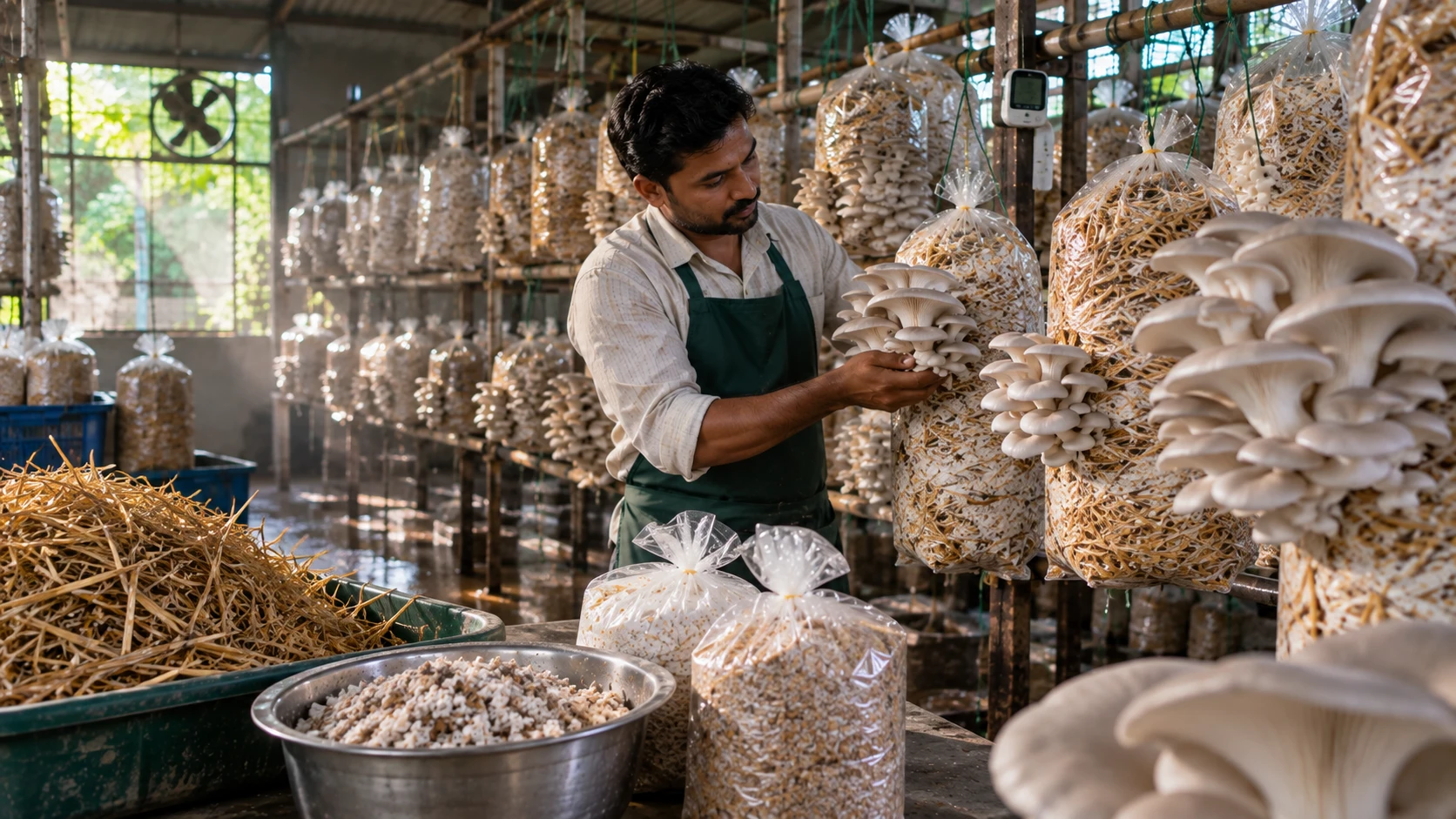
If you’re new to mushroom farming and not sure where to begin, oyster mushrooms are usually the answer. They’re the easiest variety to grow, need very little setup, and are forgiving even if you get a few things wrong on your first try. In India, oyster mushrooms are commonly called dhingri. They’ve been grown commercially here since the mid seventies, and they’re still one of the most popular starting points for new farmers. Here’s what you need to know before you begin.
What exactly is an oyster mushroom?
Oyster mushrooms belong to the genus Pleurotus. The name comes from their shape, a broad, fan-like cap that does look a bit like an oyster shell. You’ll usually see them in shades of white, grey, cream, or sometimes light brown.
They grow naturally on dead and decaying wood in forests, which is actually useful to know, because it tells you exactly what conditions they like when you’re growing them yourself: moist, shaded, and on organic material rather than soil.
Why oyster mushroom is the go-to choice for beginners
A few things make this variety stand out from the rest.
The process doesn’t need composting or casing, which most other mushrooms require. You also don’t need to sterilise the substrate, just pasteurise it, which is a simpler and cheaper step. On top of that, oyster mushrooms tolerate a wider temperature range than button mushrooms, so you don’t need expensive cooling equipment to get started.
They also grow fast. Most crops are ready in a matter of weeks, not months, and one growing cycle can give you a few harvests, called flushes, before the batch is done.
The growing conditions oyster mushrooms need
Oyster mushrooms grow best in temperatures between 20 and 30 degrees Celsius, with humidity around 55 to 70 percent. In most parts of India, that means you can grow them for six to eight months of the year without much extra effort, and even through summer if you can manage the extra humidity they need.
What you’ll need to get started
The basics are simple. You need good spawn (this is essentially the mushroom’s seed material, grown on grains or sawdust), a substrate like wheat or paddy straw, poly bags or a similar container, and a clean space with decent airflow.
Spawn quality matters more than almost anything else here. You can get it from government sources like the Directorate of Mushroom Research, or from a trusted private supplier. Either way, don’t skip this step or try to save money on it, because weak spawn usually means a weak harvest.
Growing oyster mushrooms step by step
1. Soak and pasteurise the straw. This kills off unwanted organisms that could compete with your mushroom spawn.
2. Cool and drain the straw until it’s damp but not soaking wet.
3. Mix in the spawn , layering it with the straw as you fill your poly bags.
4. Seal the bags and keep them in a dark, humid space. This is the incubation stage.
5. Wait for the mycelium to spread. The bag should turn mostly white within a week or two.
6. Move the bags to light and fresh air once you see small pinheads forming.
7. Mist regularly to keep humidity up while the mushrooms develop.
8. Harvest by twisting gently at the base , not cutting. You can usually get two or three more flushes from the same bag.
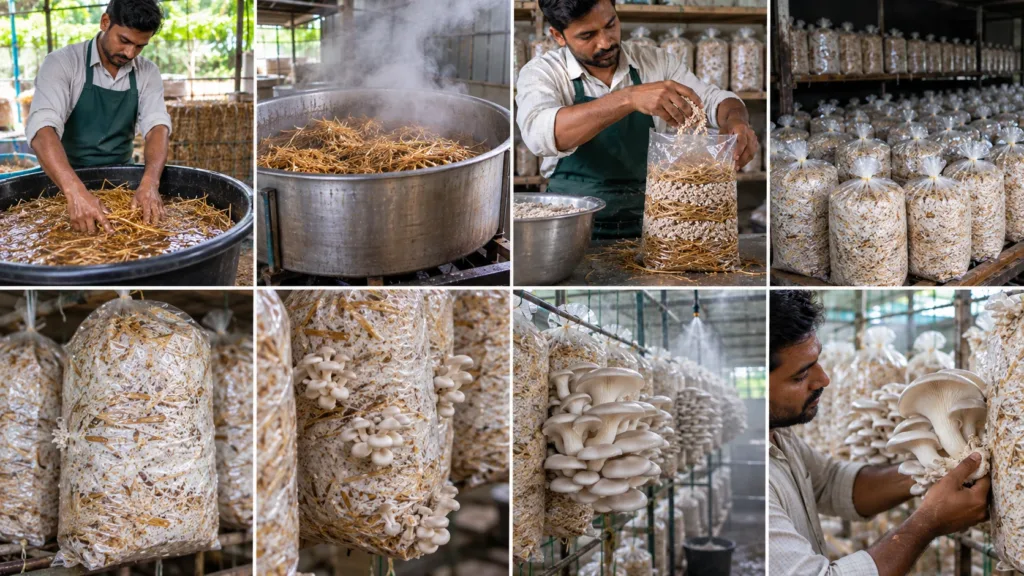
Here’s a quick summary of how the timeline usually looks:
| Stage | What happens | Typical duration |
|---|---|---|
| Substrate prep | Straw is pasteurised, cooled, and drained | 1 to 2 days |
| Spawning | Spawn mixed into the substrate and packed into bags | Half a day |
| Incubation | Bags kept in the dark, mycelium spreads through the substrate | 10 to 15 days |
| Pinning | Small mushroom heads (pinheads) start to form | 2 to 4 days |
| Fruiting | Bags moved to light and air, mushrooms grow to full size | 4 to 6 days |
| Harvesting | First flush picked; 2 to 3 more flushes follow | Spread over 3 to 4 weeks |
The exact numbers shift a bit depending on your room’s temperature and humidity, but this gives you a realistic idea of what to expect from spawning to your last harvest.
Oyster mushrooms and health
Beyond being easy to grow, oyster mushrooms are genuinely good for you, which is part of why demand keeps rising.
They’re low in calories and fat, contain no cholesterol, and are a solid source of plant protein and fibre. They’re also rich in B vitamins, vitamin D, potassium, iron, and antioxidants like ergothioneine. Some studies have linked regular consumption to lower cholesterol and better blood sugar control, along with general immune support.
None of this means oyster mushrooms are a cure for anything, but as part of a normal diet, they’re a genuinely healthy addition, and that’s a message that resonates well with health-conscious buyers if you’re selling directly.
Is there a market for oyster mushrooms in India?
Yes, and it’s growing. India’s overall mushroom market was valued at close to 1.18 billion dollars a few years back and has been growing at a strong pace since. Oyster mushrooms currently make up a smaller share of total production compared to button mushrooms, but demand is rising steadily as more people look for plant-based protein options.
One thing worth knowing is that a lot of the larger export demand needs proper coordination between growers, cooperatives, and exporters. If you’re farming at a smaller scale, local markets, hotels, and direct buyers are usually a more realistic place to start.
Common mistakes to avoid
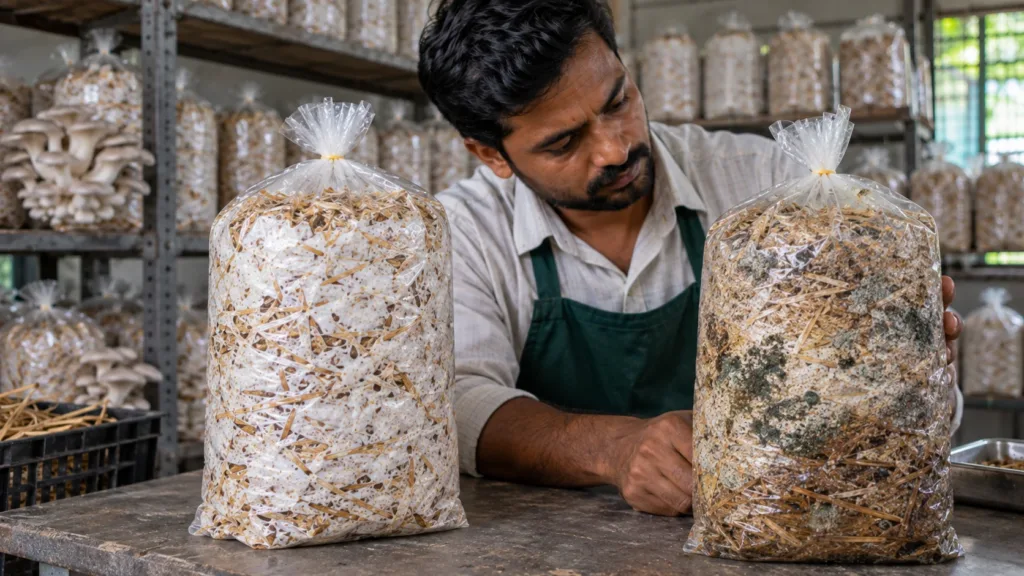
Using low-quality or old spawn is the biggest one. Skipping proper pasteurisation of the substrate is another, since that’s what keeps contamination from ruining your batch. Some beginners also rush the incubation stage or expose it to light too early, which slows down mycelium growth.
And like with any mushroom farming venture, starting without a buyer lined up is a common and avoidable mistake.
Learning it hands-on
You can read about oyster mushroom farming all day, but the details that actually matter, judging spawn quality, spotting early signs of contamination, timing your harvest right, come from doing it, not just reading about it. At da’ Mushroom Nursery, our training covers this variety in depth, on our own farms, so you’re learning from a working setup rather than theory alone.
Questions people usually ask
It can be, especially since the investment needed is lower than most other varieties and the growing cycle is fast. Profit still depends on quality and having buyers ready.
Usually around three to four weeks from spawning to your first harvest, with a few more flushes possible after that.
Dhingri is simply the common Indian name for the oyster mushroom.
? No. That’s one of the reasons they’re popular with beginners. They tolerate a much wider temperature range and don’t need dedicated cooling.
Yes. They’re low in fat and calories, cholesterol-free, and a good source of protein, fibre, and antioxidants.
Getting started
Oyster mushrooms are, honestly, the easiest place to begin if you’re serious about mushroom farming. Low cost, fast returns, and forgiving conditions make them the right first step for most new growers.
If you want to learn the process properly before you invest your own money, da’ Mushroom Nursery’s training programme covers oyster mushroom cultivation hands-on, from spawn to harvest.


About author

Add comment