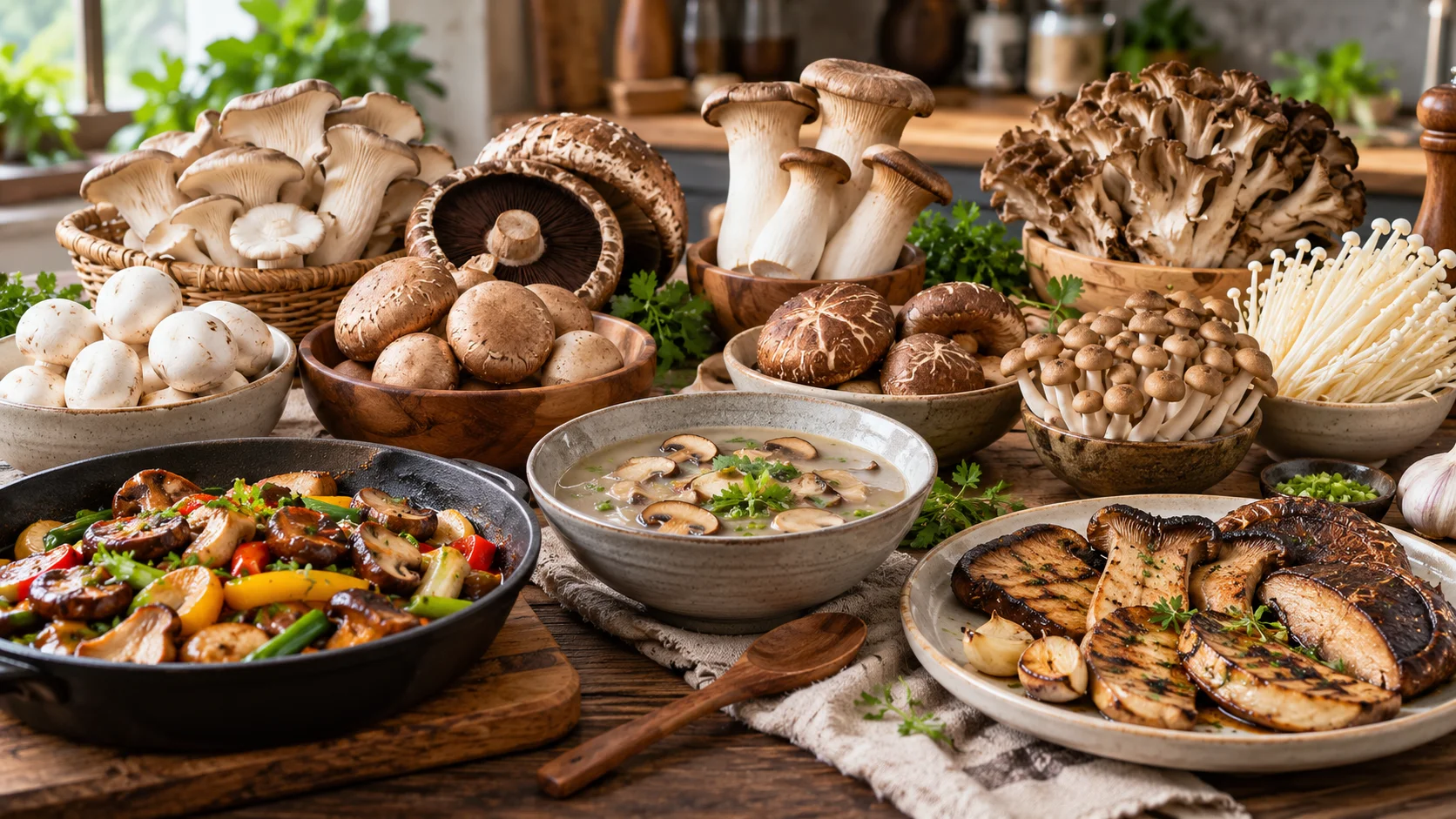
Mushrooms appear in food markets, forests, farms and health products, but people do not use them all in the same way. Different kinds of mushrooms can be grouped by species, shape, growing habitat, culinary use and whether people cultivate them.
A mushroom is the fruiting body of a fungus. Much of the organism lives as a network called mycelium in soil, wood or another material. The visible cap, stem or cluster releases spores when conditions become suitable.
This guide explains different kinds of mushrooms in simple language. It focuses on well-known examples and safe consumer choices, rather than wild identification.
Main Groups of Different Kinds of Mushrooms
| Group | What it means | Examples |
|---|---|---|
| Common cultivated mushrooms | Grown commercially for food | Button, oyster, shiitake |
| Wild edible mushrooms | Collected from natural habitats by experts | Morel, chanterelle, porcini |
| Functional or traditional-use mushrooms | Used in food, extracts or traditional practices | Reishi, turkey tail, lion’s mane |
| Non-edible mushrooms | Too tough, bitter or unsuitable as food | Many bracket fungi |
| Poisonous mushrooms | Contain harmful toxins | Death cap, destroying angel |
| Decomposer fungi | Break down dead organic material | Many oyster and wood-rotting species |
| Mycorrhizal fungi | Live in partnership with plant roots | Porcini, chanterelle, truffle |
These groups can overlap. For example, shiitake is edible, cultivated and associated with traditional uses. Therefore, people should describe different kinds of mushrooms with more than one label when appropriate.
Button, Cremini and Portobello: Different Kinds of Mushrooms
White button, cremini and portobello come from Agaricus bisporus. White button mushrooms have a mild flavour and are harvested young. Cremini mushrooms are brown, a little firmer and more savoury. Portobello mushrooms are mature, large and useful for roasting or grilling.
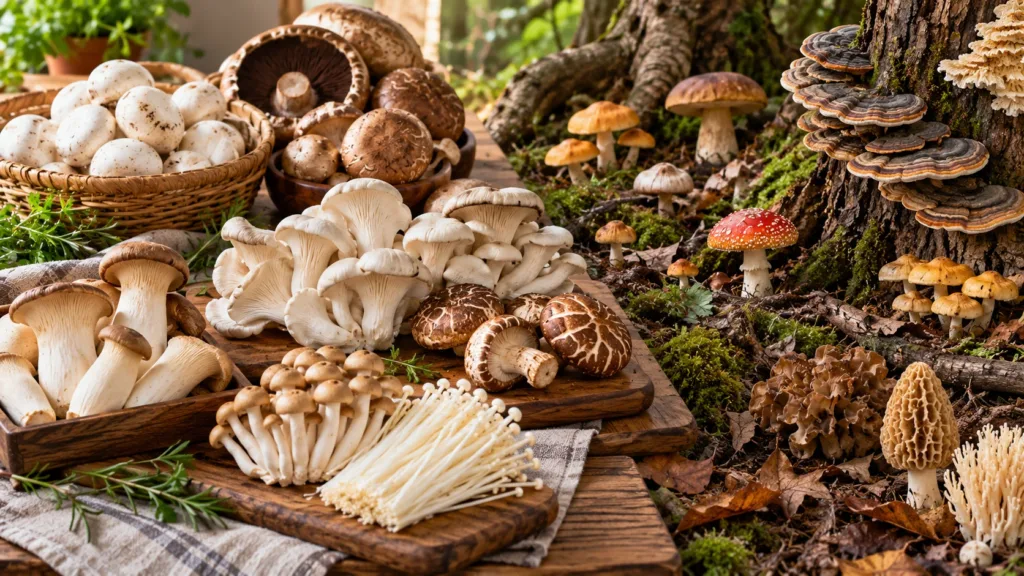
These different kinds of mushrooms show how age and strain can change a product without changing the basic species. Growers widely cultivate them on prepared compost under managed temperature, humidity and hygiene.
Use button mushrooms in curries, pizza and omelettes. Meanwhile, cremini mushrooms suit pasta and gravy. Portobello mushrooms work best when their broad caps can brown and lose excess moisture.
Oyster Family and Different Kinds of Mushrooms
Oyster mushrooms form fan-shaped caps, often in overlapping clusters. Pearl, grey, blue, pink and golden oyster varieties differ in colour and texture. King oyster belongs to the same broad culinary group but has a thick, firm stem.
Among different kinds of mushrooms, oysters are popular with growers because several species can fruit on prepared plant materials such as straw or sawdust. However, clean substrate, suitable spawn, humidity and airflow remain important.
Regular oyster caps tear easily for noodles and stir-fries. In contrast, cooks can slice and sear king oyster stems. Strong heat encourages browning and helps keep the texture from becoming watery.
Shiitake, Enoki and Shimeji: Different Kinds of Mushrooms
Shiitake has a brown cap, a chewy texture and a deep savoury taste. Fresh caps suit soups and stir-fries, while dried shiitake adds concentrated flavour to broth. Cooks often use the tough stem for stock rather than serving it.
Enoki has long, thin stems and small caps when growers produce it commercially. It should be cooked because raw enoki has been associated with foodborne illness outbreaks. Shimeji forms compact clusters and develops a nutty flavour after cooking.
These different kinds of mushrooms are common in East Asian cooking, but they now appear in many international dishes. Their textures differ, so adding all of them to the pan at the same time may produce uneven results.
How Mushrooms Grow
Saprotrophic fungi feed on dead organic material. Oyster and shiitake are examples that growers commonly cultivate on prepared plant-based substrates or logs. In contrast, mycorrhizal fungi exchange nutrients with living plant roots; porcini, chanterelles and truffles are well-known examples.
Parasitic fungi obtain resources from living hosts and may damage them. This ecological role helps explain why different kinds of mushrooms appear on lawns, tree trunks, woodland soil or decaying logs.
The visible mushroom may last only a short time, while mycelium remains in the material. Meanwhile, temperature, moisture, airflow, nutrition and season influence when fruiting occurs.
Nutrition of Different Kinds of Mushrooms
Fresh mushrooms generally contain a lot of water and few calories. They can provide modest protein and fibre along with B vitamins, potassium, copper, phosphorus and other nutrients. However, exact amounts vary by species, growing material, light exposure and preparation.
Some different kinds of mushrooms can provide vitamin D2 after ultraviolet-light exposure because their ergosterol converts through light exposure. Therefore, a label is the best guide when vitamin D content is a buying reason.
Dried mushrooms show higher nutrient values per 100 grams because much of the water is gone, but people usually eat smaller portions. Therefore, compare normal serving sizes when assessing their nutritional value.
How to Choose the Right Mushroom
For a mild dish, choose button, cremini or milky mushroom. For a firm texture, select king oyster or portobello. Shiitake and porcini give broth and sauces a stronger savoury taste. Meanwhile, delicate oyster caps and maitake work well when roasted until their edges brown.
Buy different kinds of mushrooms from reliable food sellers. Fresh specimens should feel firm and should not look slimy, badly bruised or smell sour. Similarly, dried products should remain sealed and free from moisture.
Store fresh mushrooms in the refrigerator with some airflow. Clean them shortly before use and follow package instructions. Also, cook varieties that people normally cook before eating.
Safety Across Different Kinds of Mushrooms
Poisonous species can resemble edible ones. Therefore, bright colour is not a reliable warning, and plain white mushrooms are not automatically safe. Cooking, drying or soaking does not neutralise every toxin.
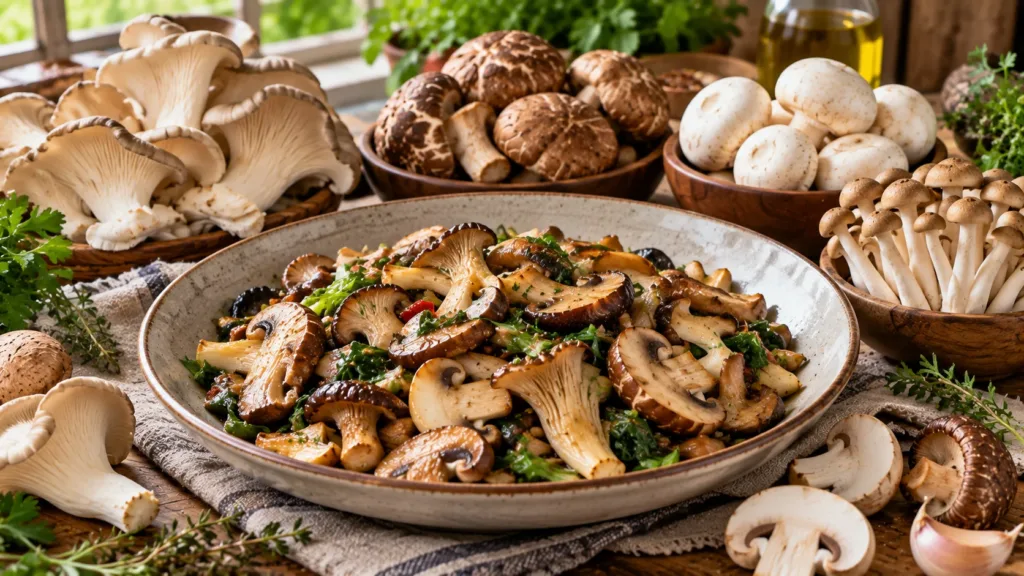
The safest way to explore different kinds of mushrooms is through recognised commercial products. Wild specimens should be identified by a qualified local expert using the complete mushroom and habitat information.
If someone eats an unknown mushroom, contact emergency medical or poison-centre services promptly. Keep a sample and photographs if possible, but do not delay care while trying to identify the mushroom online.
Frequently Asked Questions
Science has described many thousands of mushroom-forming fungi, while only a smaller group is commonly cultivated or sold as food. However, researchers continue to study new species and classifications.
Button, cremini, portobello, oyster and shiitake are widely sold. However, availability changes by region, season and local cultivation.
No. Different kinds of mushrooms belong to the fungi kingdom, although shops and recipes often place them with vegetables.
Porcini, shiitake and truffle products can be very aromatic. However, strength depends on freshness, drying and the amount used.
Final Takeaway
Different kinds of mushrooms vary in shape, habitat, taste, texture and use. Button and oyster mushrooms suit everyday meals, while wild delicacies offer seasonal flavour and woody species are more common in extracts than cooking. However, names alone do not guarantee safety. Buy identified food varieties, cook and store them correctly, and leave wild identification to trained local experts. That approach lets you enjoy different kinds of mushrooms while avoiding unnecessary risk.
About author

Add comment