The phrase naturally grown mushrooms sounds simple, but people use it in several ways. It may describe wild mushrooms that fruit without direct human care, outdoor log-grown mushrooms, or farmed mushrooms produced on plant-based materials with limited climate control. However, it does not automatically mean organic, chemical-free, wild or safe to eat.
All mushrooms grow through natural fungal biology. Mycelium spreads through a suitable material, takes in nutrients and produces fruiting bodies when moisture, temperature, fresh air and other conditions are right. Farmers manage these conditions to make growth more predictable.
This guide explains naturally grown mushrooms, their habitats, cultivation methods, environmental role and safety in clear language.
What Are Naturally Grown Mushrooms
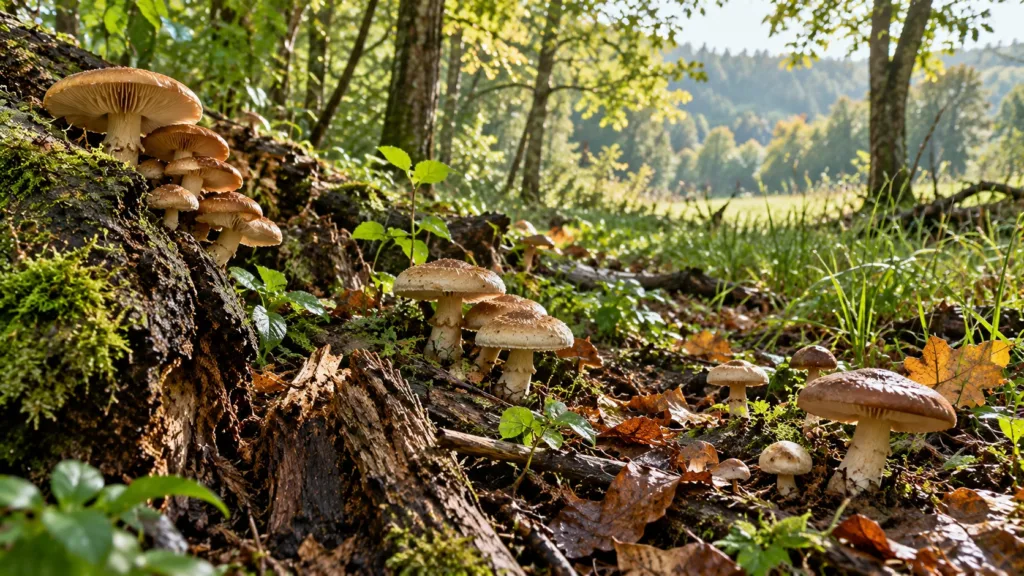
In the strictest everyday meaning, naturally grown mushrooms appear in forests, grasslands, farms or gardens without deliberate planting. Their underground or hidden mycelium was already present, and weather conditions triggered fruiting.
However, sellers may also use naturally grown mushrooms as a marketing phrase for products grown on logs, straw, sawdust or compost. Because the phrase can be vague, buyers should ask which species was grown, which substrate was used, whether the product was cultivated or foraged and whether any certification applies.
Organic is a regulated or certified claim in many markets. In contrast, natural is often less specific. Therefore, a natural label should never replace a clear species name, traceable source and proper food handling.
Wild and Cultivated Mushrooms Compared
| Point | Wild mushrooms | Cultivated mushrooms |
|---|---|---|
| Human control | Fruit in an existing habitat | Grown using selected spawn and prepared material |
| Growing material | Soil, roots, logs, litter or living trees | Compost, straw, sawdust, logs or other prepared substrate |
| Availability | Seasonal and weather-dependent | More predictable and often year-round |
| Identification | Requires expert local knowledge | Species is managed through the supply chain |
| Main risk | Toxic look-alikes and environmental contamination | Hygiene, storage and supply-chain failures |
| Examples | Wild morel, chanterelle, porcini | Button, oyster, shiitake, milky mushroom |
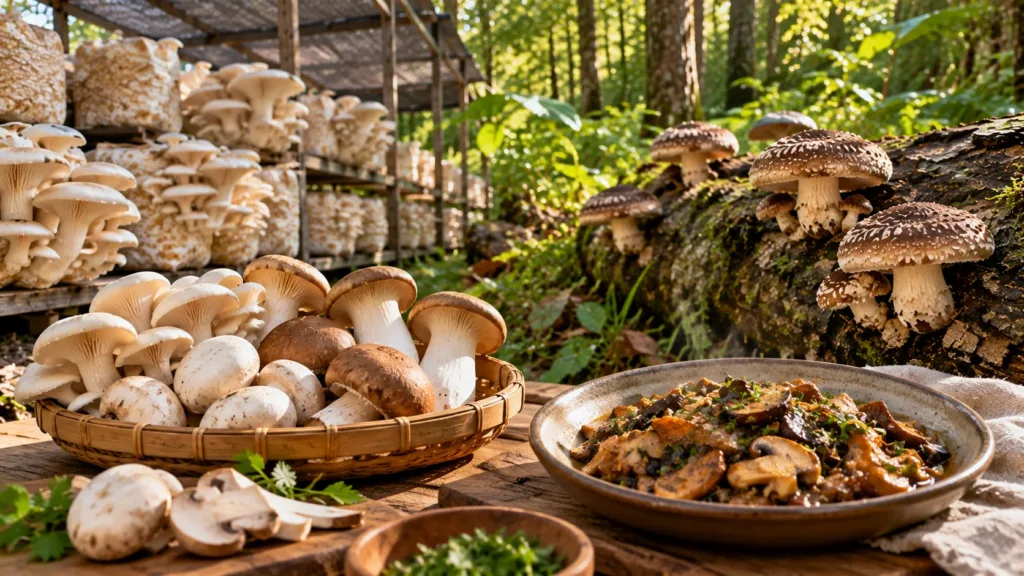
Both categories can be called naturally grown mushrooms in casual speech. Therefore, the source and production method matter more than the label.
In addition, weather and habitat affect each harvest, so size, colour, flavour and availability may change between seasons and locations.
How Mushrooms Develop in Nature
Many forest mushrooms form a partnership with tree roots. The fungus helps the plant obtain water and minerals, while the plant supplies sugars. Porcini, chanterelles and truffles are associated with these mycorrhizal relationships, making large-scale cultivation difficult.
Other naturally grown mushrooms act as decomposers. They break down dead wood, fallen leaves and other organic material. As a result, this recycling returns nutrients to the ecosystem. Oyster-like fungi and many bracket fungi often appear on weakened or dead wood.
Some fungi act as parasites of living plants or insects. Their presence can be part of natural ecological change, but it may also signal disease in a tree or crop.
Log Grown and Outdoor Cultivated Naturally Grown Mushrooms
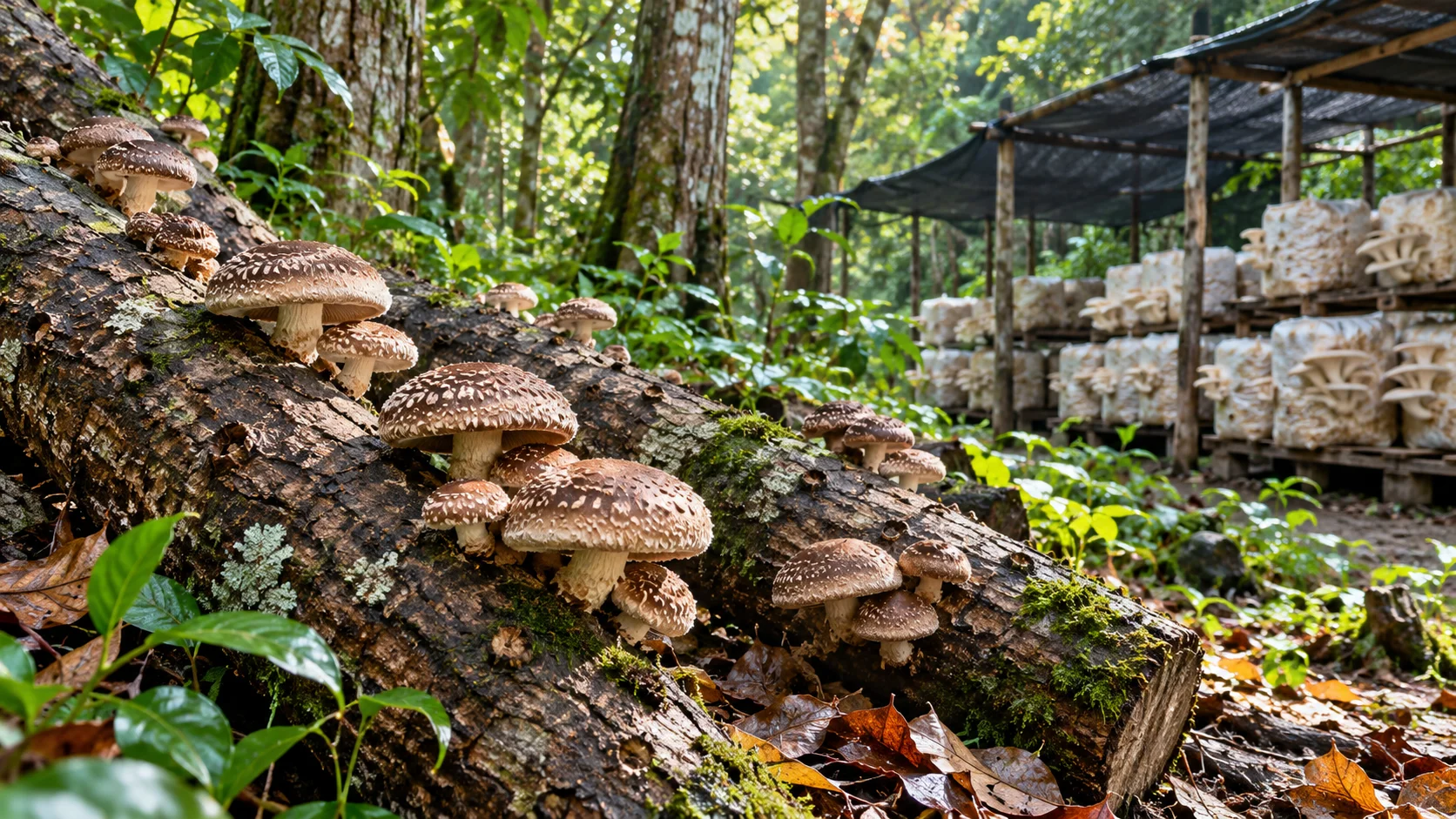
Shiitake can be cultivated by inserting spawn into suitable hardwood logs. The mycelium colonises the wood and later fruits when moisture and temperature become favourable. This method feels close to a forest process, although the grower chooses the species and manages the logs.
Oyster mushrooms can also grow on pasteurised straw, sawdust blocks and other prepared plant materials. Milky and paddy straw mushrooms suit warmer environments, while button mushrooms normally need compost and cooler fruiting conditions.
However, these naturally grown mushrooms still require clean spawn, sanitation, correct moisture and airflow. A natural substrate does not remove the need for skilled management or food-safety controls.
Nutrition and Flavour of Naturally Grown Mushrooms
Fresh mushrooms are mostly water and usually low in calories and fat. Depending on the species, they can provide modest protein and fibre along with riboflavin, niacin, pantothenic acid, potassium, copper and phosphorus.
The nutrition of naturally grown mushrooms varies with species, substrate, maturity, storage and light exposure. Therefore, wild does not automatically mean more nutritious than cultivated. Farmed products may offer more consistent quality, while wild products can differ from one location or season to another.
Some mushrooms form vitamin D2 after ultraviolet-light exposure. Therefore, check tested label information when vitamin D is important rather than relying on the words natural or sun-grown.
Are Naturally Grown Mushrooms Organic
Not necessarily. Organic production follows specific certification standards for inputs and handling. In contrast, a product described only as natural may not have undergone inspection under an organic programme.
Naturally grown mushrooms from the wild also cannot be assumed to be free from pollution. Fungi can take up substances from their environment, including heavy metals. For this reason, roadside, industrial and contaminated sites are poor collection areas even when the species is edible.
Instead, look for a precise product description, farm or harvester information, a certification mark where relevant and clear storage instructions.
Buying and Storing Naturally Grown Mushrooms
Buy naturally grown mushrooms only when the species and seller are clear. Fresh mushrooms should be firm and clean-smelling, without slime, sour odour or heavy decay. Packaged products should also carry appropriate dates and handling instructions.
After buying them, refrigerate fresh mushrooms promptly in breathable packaging. Clean them shortly before cooking and avoid long soaking. Similarly, dried mushrooms should stay sealed, dry and protected from insects.
If a seller cannot explain whether a product was cultivated or foraged, or cannot provide a dependable species name, choose a more traceable option.
Wild Mushroom Safety
The main risk with wild naturally grown mushrooms is misidentification. Poisonous species can look plain, while edible species can have toxic look-alikes. Therefore, colour, smell, animal feeding and folk tests do not prove safety.
Furthermore, cooking, boiling, drying or peeling does not destroy every mushroom toxin. Phone applications and photographs can assist with study, but they should not become the final decision before eating.
Only a trained local expert should confirm wild mushrooms for food. If anyone eats an unknown mushroom, contact emergency medical or poison-centre services immediately. Keep a sample and photographs for identification, but do not wait for symptoms.
Frequently Asked Questions
No. The phrase may describe wild mushrooms, outdoor log cultivation or farmed mushrooms grown on natural materials. Therefore, ask the seller what it means.
Not automatically. Nutrition depends on species and growing conditions. In contrast, cultivated mushrooms can be nutritious, traceable and safer for ordinary buyers.
Yes. Natural growth says nothing about edibility. Many toxic mushrooms grow without human help, and some closely resemble edible species.
Most edible varieties need a species-appropriate substrate and clean spawn. Therefore, a recognised kit or reliable cultivation guide is safer and more predictable than adding unknown material to soil.
Final Takeaway
Naturally grown mushrooms may be wild, log-grown or cultivated on plant-based substrates. However, the phrase is descriptive, not a guarantee of organic certification, extra nutrition or safe identification.
Choose naturally grown mushrooms based on verified species, transparent source, freshness and correct handling. Enjoy recognised cultivated varieties freely, but treat every unidentified wild mushroom as unsafe to eat.
About author

Add comment