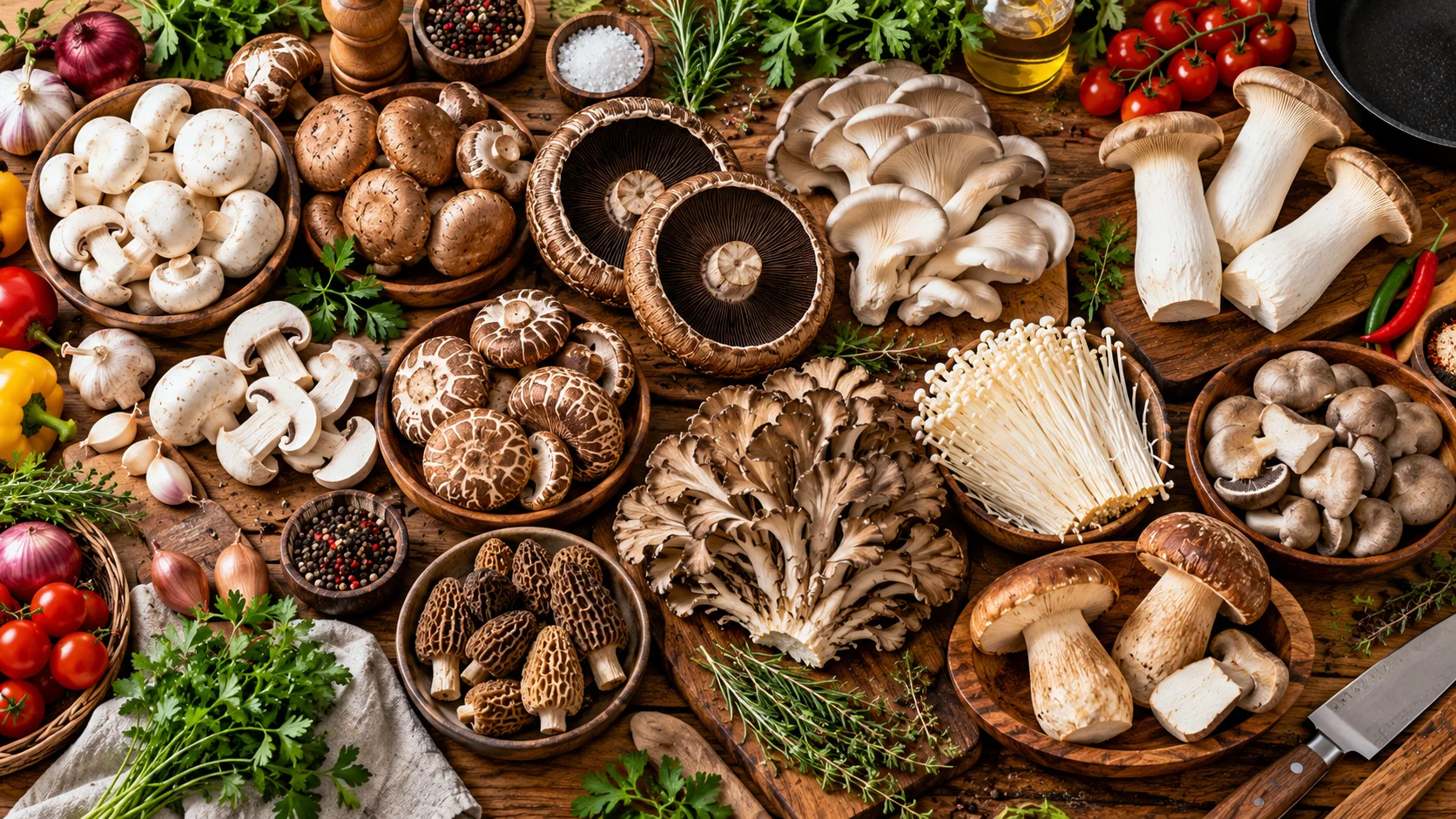
The mushroom section can feel confusing because similar-looking packs may have different names, textures and prices. Learning common eating mushroom types makes shopping easier and helps you choose the right variety for soup, curry, noodles, grilling or a quick saute.
Mushrooms belong to the fungi kingdom rather than the vegetable group. Most fresh varieties contain plenty of water, few calories and small amounts of protein, fibre, B vitamins and minerals. However, their strongest kitchen advantage is their savoury umami flavour.
This guide focuses on cultivated and commercially sold eating mushroom types. It does not provide a method for identifying wild mushrooms, which may have dangerous look-alikes.
Quick Guide to Eating Mushroom Types
| Type | Taste and texture | Good uses |
|---|---|---|
| White button | Mild, tender | Pizza, curry, omelette, soup |
| Cremini | Deeper and firmer than button | Pasta, gravy, stir-fry |
| Portobello | Rich, broad and meaty | Grilling, roasting, sandwiches |
| Oyster | Mild, delicate and slightly chewy | Stir-fry, noodles, crispy snacks |
| King oyster | Thick, firm stem | Searing, skewers, vegan dishes |
| Shiitake | Earthy, smoky and chewy | Broth, fried rice, dumplings |
| Enoki | Mild, thin and crisp when briefly cooked | Hot pot, soup, noodles |
| Maitake | Woodsy with frilled edges | Roasting, sauteing, soup |
| Shimeji | Nutty and firm | Stir-fry, rice, pasta |
| Morel | Deep, earthy and hollow | Sauces and special dishes |
| Porcini | Strong, nutty and savoury | Risotto, soup, sauce |
| Paddy straw | Mild and soft | Curries, soups, Asian dishes |
These eating mushroom types behave differently in the pan. Delicate mushrooms need brief cooking, while thick caps and stems can handle stronger heat.
For a first purchase, choose one mild variety and one stronger variety. Then, cook them separately, notice how much water each releases and compare the finished texture. This simple test teaches more than buying several unfamiliar packs for one crowded recipe.
White Button, Cremini and Portobello Eating Mushroom Types
White button, cremini and portobello are forms of the same species, Agaricus bisporus. White buttons are harvested young and have the mildest flavour. Cremini are brown and slightly more mature, while portobellos develop into large, open caps.
Among eating mushroom types, this family is the easiest place to start. Buttons suit mixed dishes because they do not dominate other flavours. Meanwhile, cremini give gravies and pasta more depth. Portobello caps can be brushed with oil and roasted or grilled, although they should not be treated as a complete protein replacement.
When choosing them, look for firm caps without slime. The dark gills of a portobello are edible, but some cooks remove them to prevent a pale sauce from becoming brown.
Oyster and King Oyster Eating Mushroom Types
Oyster mushrooms grow in layered clusters with fan-shaped caps. Their edges become crisp under high heat, while the centre stays tender. Tear them by hand for stir-fries or roast them in a single layer.
King oyster has a thick stem and a small cap. It is one of the most useful eating mushroom types when you want a firm bite. You can slice the stem into rounds, score the surface and sear it, or cut it lengthwise for skewers.
Oyster varieties can be white, grey, blue, yellow or pink. However, colour does not automatically change the basic cooking method, while texture and flavour can vary by strain and freshness.
Shiitake Eating Mushroom Types
Shiitake mushrooms have brown caps and a strong savoury aroma. Fresh shiitake work well in noodles, fried rice and soup. Dried shiitake develop a concentrated flavour, so you should usually soak them before use. The soaking liquid can also flavour broth after you strain it.
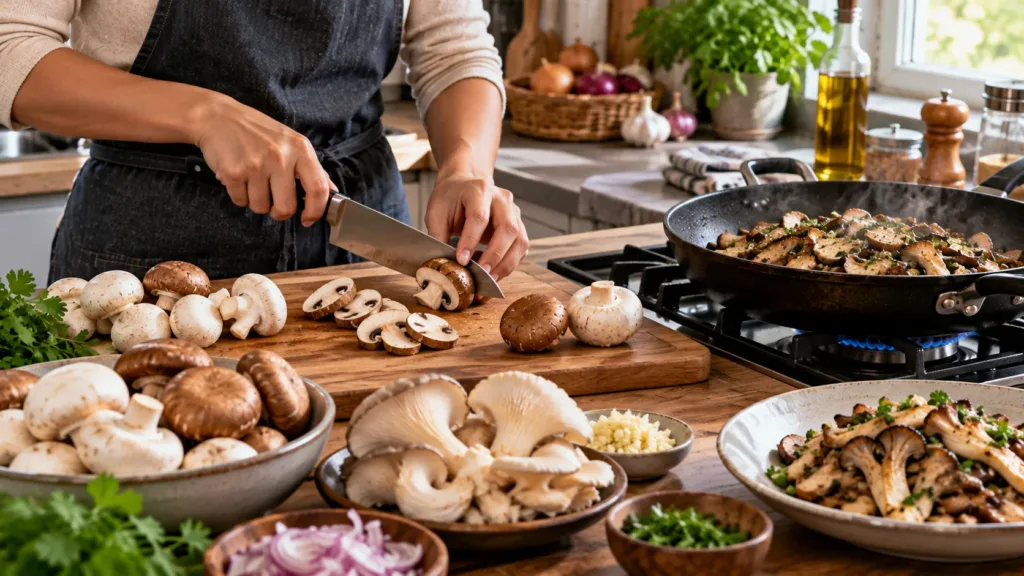
The stems are often too fibrous to eat comfortably, but they can add flavour to stock. Among common eating mushroom types, shiitake benefits from thorough cooking. Raw or undercooked shiitake can cause a skin reaction in some people.
Use a modest amount at first because its flavour is stronger than button mushroom. It also pairs well with ginger, garlic, soy, sesame or clear broth.
Nutrition Across Eating Mushroom Types
Most fresh eating mushroom types are low in calories and fat because they contain plenty of water. They also provide modest protein and fibre, along with nutrients such as riboflavin, niacin, pantothenic acid, copper, potassium and phosphorus in varying amounts.
Vitamin D is not constant. Mushrooms contain ergosterol, which can form vitamin D2 after ultraviolet-light exposure. Therefore, check the label if vitamin D is important to your purchase.
Dried mushrooms appear more nutrient-dense per 100 grams because they lose much of their water. However, people generally eat smaller portions. For that reason, compare realistic serving sizes rather than equal weights of fresh and dried products.
How to Choose and Store Eating Mushroom Types
Fresh eating mushroom types should look firm and smell clean and earthy, not sour. Avoid heavy bruising, wet slime and visible decay. Refrigerate them promptly in packaging that allows some airflow, and follow any date or storage instructions.
Clean mushrooms shortly before cooking. A quick rinse is acceptable when needed, but do not leave them soaking because they can hold extra water. After rinsing, pat them dry for better browning.
Dried products should be free from moisture and insects. Store them sealed in a cool, dry place and rehydrate only the portion required.
Safety Rules for Eating Mushroom Types
Buy eating mushroom types from a reliable food seller. Never eat a wild mushroom simply because it resembles one in this guide. Poisonous species can resemble edible varieties in general colour and shape, and cooking does not neutralise every toxin.
Cook varieties that are normally cooked, especially enoki, shiitake and morels. If anyone feels ill after eating an unknown mushroom, seek urgent medical or poison-centre advice and keep a sample for possible identification.
People with a known mushroom allergy should avoid them. Likewise, anyone with a medical condition requiring a restricted diet should use personalised professional advice.
Frequently Asked Questions
White button and cremini are mild, affordable and easy to use. Oyster mushrooms are also simple to prepare when roasted or stir-fried.
Portobello and king oyster have the firmest bite among common eating mushroom types. They add texture, but they are not nutritionally equal to meat.
Some commercial button mushrooms are served raw, but cooking generally improves texture and reduces food-safety or digestive concerns. Several varieties should be cooked.
Dried mushrooms retain concentrated flavour and nutrients, but portions are small. Therefore, watch added salt in seasoned products and follow the rehydration directions.
Final Takeaway
Choosing between eating mushroom types becomes simple when you compare flavour, texture and cooking method. Button and cremini suit everyday meals, while oyster and king oyster offer distinctive textures. Meanwhile, shiitake, porcini and morel deliver stronger flavour.
Start with a reliable seller, cook each variety appropriately and judge the whole recipe rather than one ingredient. Exploring eating mushroom types should make meals more interesting without compromising basic food safety.
About author

Add comment